
How to pass your GCSE English Exams in 16 Days.. (2026 Exams)
Hi there,
Happy Friday and I hope you had an awesome week! If you’re in Year 11 (or you’re the parent of a Year 11 student!) you will know you’ve now got exactly 16 Days until the Literature Paper 1 exams.
That’s not very long and the last thing you want to do is waste your time on pointless tasks that keep you feeling “busy” but won’t do much to help you get the grades you deserve when you’re in the exam hall on Monday 11 May. It’s tempting to try and do everything right now – cram, re-read, do exam papers, endlessly scroll and watch a bunch of revision videos and TikToks. Yet this won’t move the needle unless you’re focusing on the RIGHT things.
So what should you do in this final stretch to Literature Paper 1 & 2 exams?
1️⃣ Memorise quotes the CLEVER way:
Passing your exams is all about how well you can answer the questions you’re given. Examiners don’t care if you know the books you’ve studied inside out. They just want to see a well written essay.
This is good news for you as all you need to do is cram short, flexible quotes you can use for ANY question, that goes with CHARACTERS you may be asked to write about and THEMES.
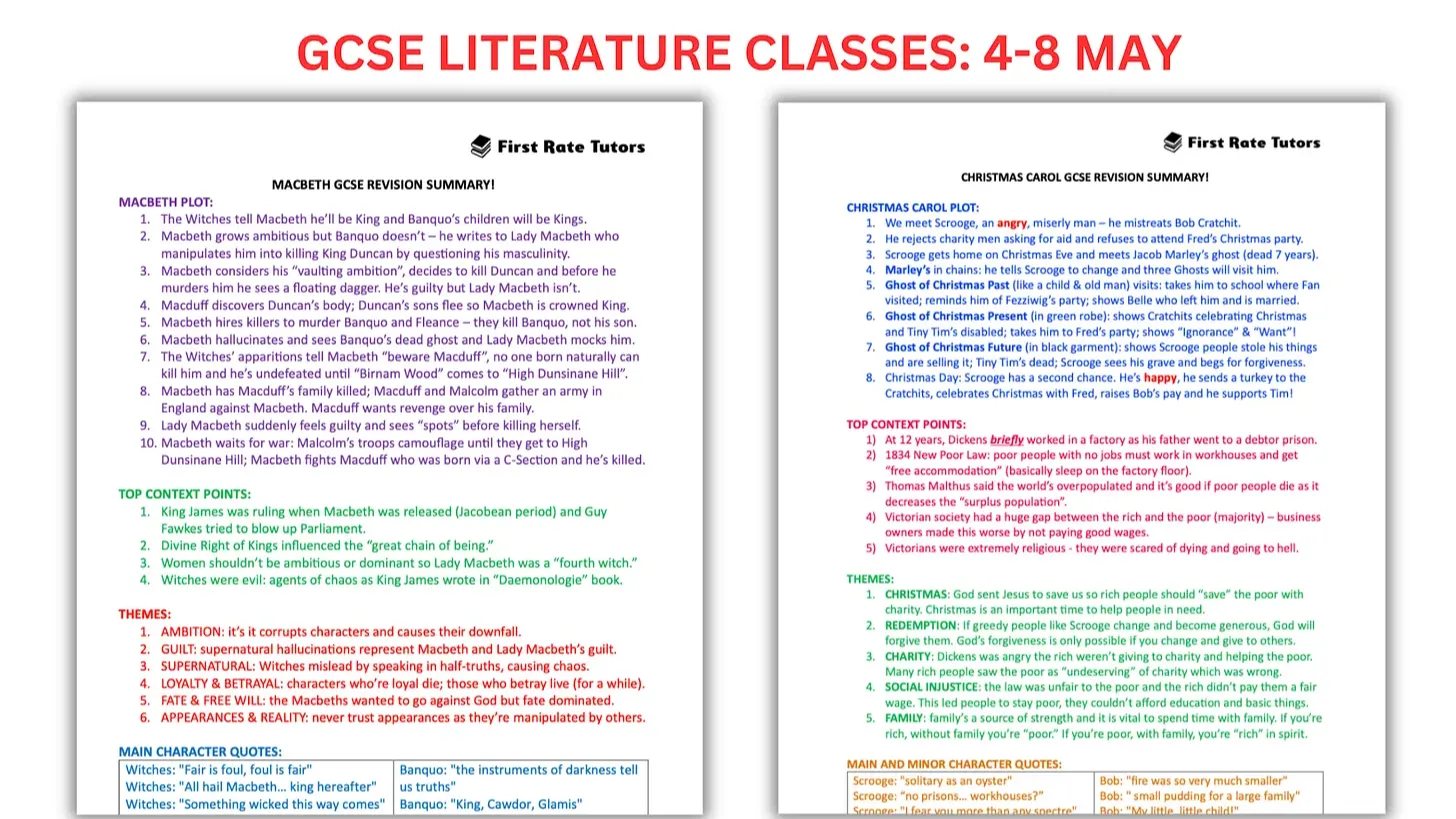
I’ve put together a 3-page cheat sheet I’ll be sharing in my final Literature Booster Classes on 4-8 May (1 week before the exams) – just memorise what’s included there:
2️⃣ Context, context, context!
If you’re aiming for a 6-9 in your Literature exams, you must ABSOLUTELY memorise context. Do not neglect those A03 marks – they are the difference between borderline grades.
Again, pick 2-3 context points per text (or poem), memorise them. Again, I’ve put these all in 1 place for you in my cheat sheet, which I’ll share in my final Literature revision classes on 4-8 May!
3️⃣ Learn & use one strong paragraph structure:
Examiners also want to see well written essays that are clear and easy for them to follow. Write in a way where you hold your examiner’s hand, guide them through your ideas, weave in your quotes, themes and context seamlessly.
I personally believe in keeping paragraphs simple but then going DEEP in your writing. My suggestion? Go for PEEL:
Point – answer the question
Evidence – quote
Explain – analyse by adding the writer’s technique, context, theme and reader effect
Link – link back to the question
4️⃣ Practice past papers:
Practice past papers under timed conditions. Better still (to know where you’ve gone wrong and where you can improve), practice an exam paper with a well-written model answer you can review and cross-check after.
That’s why during my Literature classes on 4-8 May, I’ll also go over MODEL ANSWERS and students who join will also get an extra free model answer (to another past paper exam). To see what a top grade response looks like, then absorb, take in the language, analysis and practice the same question again – to see what sunk in!

5️⃣ Avoid the mistake most students WILL make…
Finally, you must absolutely AVOID is retelling the story’s plot. Many students every single year slip into describing the extract. Describing the play or the novel. Retelling the story. This will get you precisely ZERO MARKS. Avoid, avoid, avoid and analyse, analyse, analyse!
PS: Panicking? Need a final push?
I’ll run a final series of Literature BOOSTER Revision classes going over EVERYTHING you need (last minute quotes, GCSE model answers, your questions) on 4-8 May. Join here:
FREE GCSE MODEL ANSWER:
Better still, I’ll offer all my students an extra past paper with full mark model answers for every single text I cover (in addition to the model answer I go over during the lesson!)
I hope you can join in! 😊
Stay connected with news and updates!
Join our mailing list to receive the latest news and updates from our team.
Don't worry, your information will not be shared.
We hate SPAM. We will never sell your information, for any reason.
