
Everything you need to know about Language Paper 2, Question 5!
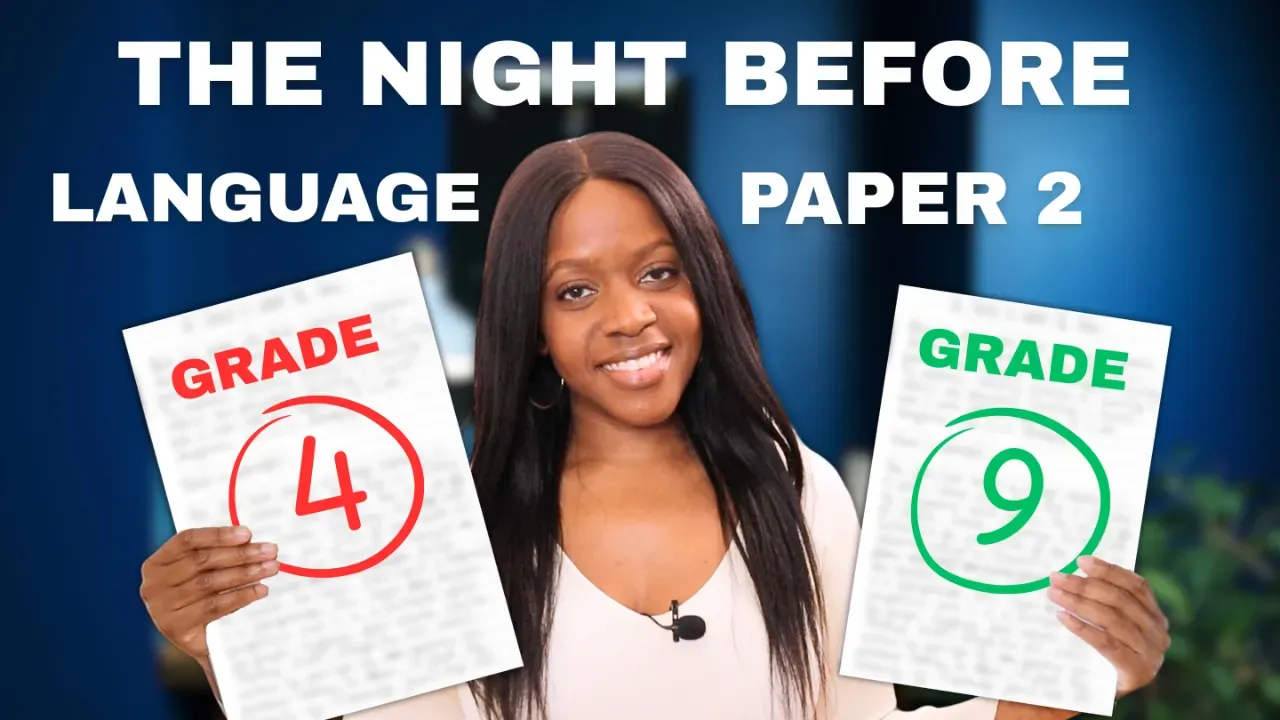
GUYS, IT IS TIME!!!! It is the day before Language Paper 2, and then you are DONE. Woop woop!
In 5 hours I have my Night Before Language Paper 2 class and I am VERY EXCITED for it. And so, I wrote this for you guys with some spare time I had before then.
So let’s talk about Question 5. It is 50% of your marks in Language Paper 2 and 25% of your total English Language grade. Literally, if you get the top bands here you are almost good, almost away from the 40% statistic of students who fail English Language every year. So take this question seriously.
The thing you need to remember, at all times is: form, audience, purpose.
-
Form.
Is it a letter, an article, a speech, a blog post, an essay, a leaflet? There are very few forms used on this paper, so make sure you know them all now. A letter wants a greeting and a sign-off. An article wants a headline that earns the reader’s attention, and an opening that pulls them in. A speech wants direct address. A blog post wants an intimate, one-to-one voice. Each form carries its own conventions, and if you ignore them, you are already in lower band category.
-
Audience.
The instruction will name them: a head teacher, the readers of a national broadsheet, an audience of parents in a school hall, your peers in a school magazine. Now, your work is to picture them. Are they older than you, younger, your peers? What do they already know about your subject? What language do they speak when they speak among themselves? A top band, Grade 9 answer will understand its audience and tailor the language to suit them. A middle-band answer will write the same way to everyone.
-
Purpose.
Are you arguing, or are you persuading? They sound similar, but they pull in different directions. To argue is to reason through both sides of a question, giving the opposing view real weight before you answer it. To persuade is to move someone from one position to another, using whatever combination of logic and emotion the audience will respond to. Read the instructions carefully, decide which the examiner has asked for, and lean into it.
Let’s now implement this. Suppose Paper 2 hands you this statement:
“Reading for pleasure is a dying habit, and our generation will be poorer for losing it.”
You agree, and you are asked, in turn, to write a letter, an article and a speech defending the same position. This is how each one would go.
1) The letter
If the form is a letter, and the audience is the head teacher’s office, then your tone needs to be measured and respectful, and your vocabulary formal. This is because you are a young person addressing an authority.
Dear Mrs Okafor,
I am writing to ask the school to consider setting aside fifteen minutes at the start of each day for silent reading, of any book the pupil chooses. I make this request because our generation is losing the skill of reading. Reading for pleasure has been falling among teenagers for some years now, and with it I feel as though the number of great literary works will go unwritten, along with our attention, vocabulary and the capacity to appreciate the books that shaped the world we now live in. I believe the school is well-placed to begin the work of restoring it.
2) The article
Same topic, but the form is now an article on the page of a Sunday newspaper. The clue is in the day. Sunday papers are read slowly, with a cup of tea, on a sofa, by a reader who has chosen to sit down with you. So the writing should be warmer and more personal. You are speaking to a thoughtful adult who is ready to be moved.
The empty bedside table: why our children have stopped reading, and why that should worry us
When I was young, the evenings around our house had a kind of texture to them. My mother read her novel on the sofa. My father worked through the Sunday paper from cover to cover. The news came on in the background, and the rest of us drifted between our own worlds, each of us busy with a book or a thought. I look around now and that evening has vanished. The bedside tables in my friends’ houses are stacked with phone chargers, never books. The children in the family I babysit answer “how r u” in three letters, and they tell each other to “clock it”. None of that is the end of the world, and I refuse to be the columnist who pretends that today’s young people are stupid. They are very far from stupid but the art of reading is being lost and something else along with it.
Look at what has shifted. There’s a headline, the vocabulary is more relaxed than the letter and the general atmosphere is calmer and more thoughtful.
3) The speech
Same topic again, and now you are standing in front of a hall of parents. The form is a speech. Your register should turn toward performance and everything should tighten: shorter sentences, plainer vocabulary, more rhythm, and direct address.
Good evening. Before I start, I want you to do one thing for me. Picture the last time you saw your own child reach for a book, a real book, one nobody had told them to read. Some of you can see it easily. For some of you, no such picture comes. And it is for that second group that I am here tonight.
We are losing something in our houses, and I think we have yet to admit it to ourselves. The book on the bedside table has been replaced by the screen on the pillow. The half hour with a novel has become the half hour scrolling. Our children read more words in a single day than any generation before them, but they read them in fragments, in two-line bursts, and the long slow pleasure of getting lost in a story is starting to slip out of reach.
In this piece, the vocabulary is plain because most ambitious vocabulary, however beautiful on the page, vanish before the next phrase arrives when read aloud. The sentences are short. The rhythm is built for breath. And there is repetition for the ear.
So tomorrow when you open your paper and turn to Question 5, do this: Underline the form, the audience, the purpose. Write them in plain words beside the question, “Letter. Head teacher. Argue.” or “Speech. Parents. Persuade.” Then plan for five minutes.
And if you want me to walk you through Question 5 properly, and show you how to write a Grade 9 answer, plus get access to a Language Paper 2 framework you can easily remember in the exam hall, join my class today evening.
It’s in 5 hours, that is on Thursday 4 June, 5pm to 8pm.
If you join, you will get:
✅ A walkthrough of every question on the AQA Language Paper 2 exam
✅ A clear framework to help you answer ALL five questions
✅ Guidance on what examiners are looking for
✅ Timing strategies for the full paper
✅ Model answers to revise from
✅ The full lesson recording to rewatch before bed
Keen to know more?
🔸 You can get more info here: firstratetutors.com/paper2
🔸 If you have any questions, you can always email me or text me on 07757 274094.
xxx,
Barbara
Stay connected with news and updates!
Join our mailing list to receive the latest news and updates from our team.
Don't worry, your information will not be shared.
We hate SPAM. We will never sell your information, for any reason.
